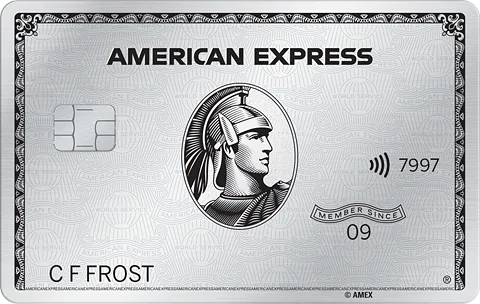
Amex Platinum: covers its $895 fee only if the hotel and bills line up
Platinum finished $204.80 ahead of a 2% card for travelers whose bills and hotel fit its credits, and $53.20 behind with a direct hotel booking.
The short answer
The Platinum Card from American Express is a premium travel card with Membership Rewards points, lounge access and credits for particular purchases. It suits travelers whose existing bills and bookings already match those credits, and it charges an $895 annual fee.
Julia's test compares a renewal year with keeping a no-fee 2% card. With a qualifying prepaid hotel stay and the credits used on bills she already expected to pay, Platinum finishes $204.80 ahead. Book the same hotel directly and it finishes $53.20 behind.
The card is a weaker fit for anyone who would rearrange spending to use credits, prefers to book hotels directly, or would not use the benefits, which Julia values at $0. The Studio's Wallet Score is 45 out of 100, a modest grade that mainly warns about fit.
The Studio's verdict on fit is "Travelers whose existing bills and bookings match its specific credits." Its limitation: "Credits outside the test budgets count for zero. Lounge access has no assumed cash savings."
What it costs
Personal Platinum costs $895 a year, and the fee hits every year. Julia measures a renewal year, without a welcome bonus, against keeping a no-fee 2% card. Other household spending stays on that card and cancels out of the comparison.
A paid Additional Platinum Card, the other way to bring a companion into lounges, currently costs $195 a year.
What it earns
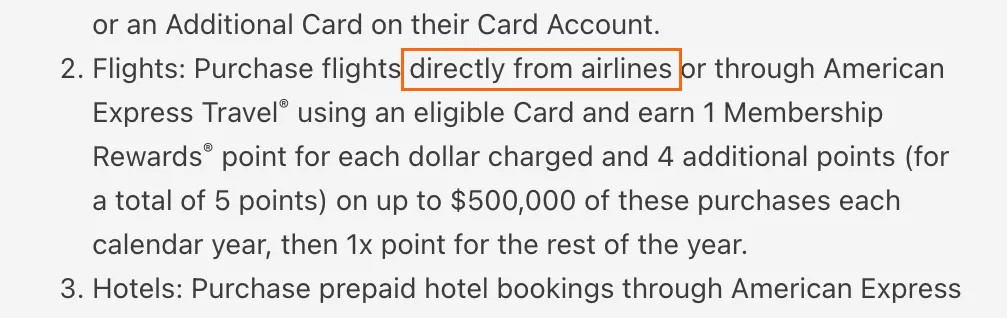
- 5 points per dollar on eligible flights booked directly with airlines, on up to $500,000 of those purchases each calendar year.
- 5 points per dollar on eligible prepaid hotels booked through Amex Travel.
- 1 point per dollar on other eligible charges.
Julia values points at 1 cent each when they pay for an eligible Amex Travel flight. The part of a ride covered by Uber Cash earns no card rewards.
The credits, used honestly
Julia counts a credit only when it replaces something the household already planned to buy, so the amount that counts is often smaller than the allowance.
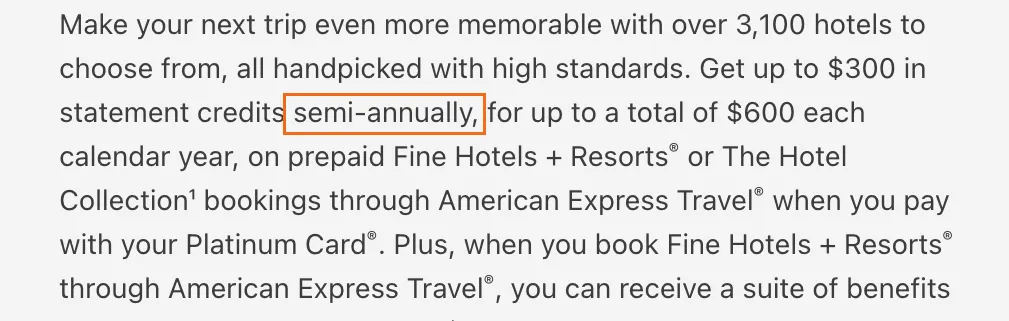
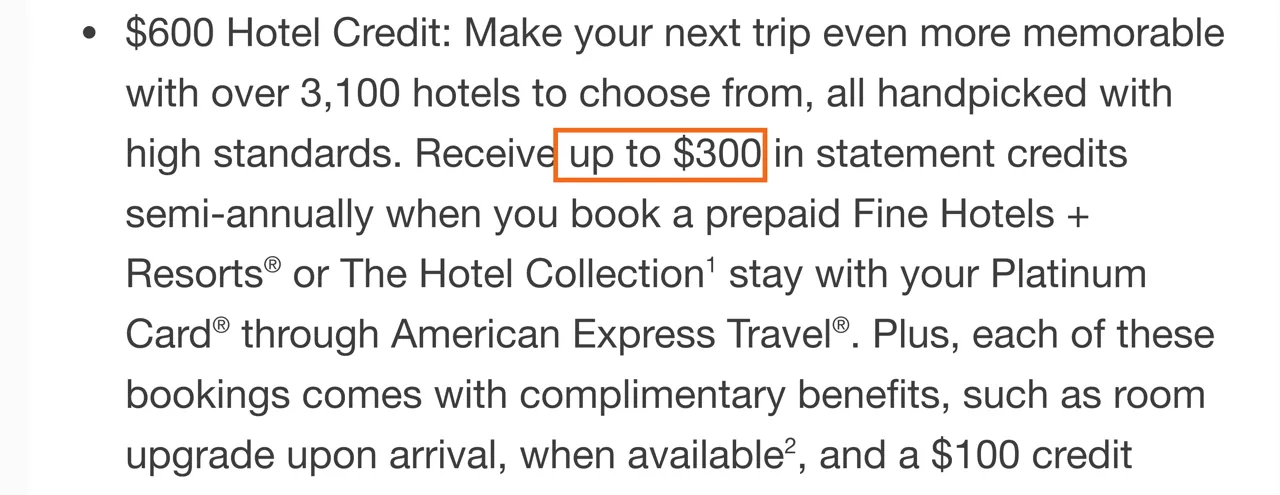
- Hotel: up to $600 a year, split into $300 for each calendar half-year, on eligible prepaid Fine Hotels and Resorts or Hotel Collection bookings through Amex Travel.
- Digital entertainment: up to $25 a month after enrollment, on participating providers billed through eligible routes. A $20 monthly bill counts $240, not the full $300.
- Resy: up to $100 each quarter after enrollment, subject to restaurant and purchase rules. Spending $60 each quarter counts $240, not $400.
- Uber Cash: $15 a month, plus $20 extra in December, for eligible U.S. use. Julia counts 8 ordinary months at $15, or $120, and nothing for unused months.
- Airline incidental: up to $200 each calendar year with one selected qualifying airline. She counts $100 of baggage or other covered fees.
The Uber One membership credit counts as $0 because Julia does not want the membership. Other credits, such as Lululemon's quarterly benefit and Oura's ring credit, count only when they replace something you were already buying.
The catch
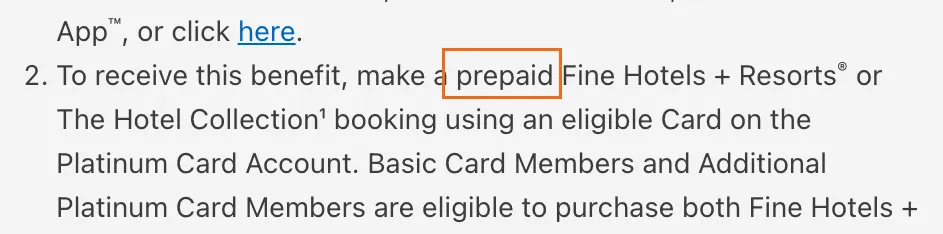
The hotel credit depends on the booking. Hotel Collection requires at least 2 consecutive nights, and a pay-at-the-hotel reservation is not the same qualifying prepaid purchase. Processing dates, refunds and account conditions can affect reimbursement, so a last-minute booking should not be assumed to qualify on its check-in date. Keep the confirmation and verify that the credit posts.
The two hotel programs differ. Fine Hotels and Resorts includes a 4 p.m. checkout that does not depend on availability, plus breakfast for 2. The Hotel Collection's late checkout is subject to availability, and breakfast is not one of its standard benefits. Julia treats a late checkout as convenience, not as cash back on the card bill.
Small details decide the other credits. An app-store charge might not qualify for the entertainment credit even if the service is listed, so check who bills you. Uber Cash needs the card added, the required eligible Amex payment method chosen, and a check that it applies before ordering. The airline credit needs the airline chosen first, and tickets, upgrades and gift cards are not general ways to use it.
Lounge access has conditions too. An adult Centurion guest can cost $50 per visit unless complimentary-guest eligibility is met, so 1 adult guest on 4 visits costs $200, against $195 a year for a paid Additional Platinum Card. Priority Pass requires enrollment, and Delta Sky Club has eligible-ticket restrictions and a 10-visit benefit-year allowance. A large lounge network does not mean entry on every trip.
Who it fits
Platinum fits a household like Julia's: flights booked directly with airlines, a prepaid hotel stay it wanted anyway, and directly billed entertainment, Resy meals, Uber rides and airline fees it already pays. It also needs lounge visits that justify the access conditions, since lounge comfort and status get no cash value in her sums. She says she would choose it when the qualifying hotel and existing bills made it useful, then check that the lounge access fitted the trip.
It fits less well when the hotel is booked directly, when the credits sit outside the household's real bills, or when the family would order extra food or buy an unwanted membership just to use them. In that case Julia would make the hotel choice first and reassess the card around it.
The arithmetic
Julia plans a year of spending that would otherwise go on a no-fee 2% card:
- $5,000 of flights booked directly with airlines.
- A hotel stay priced at $500 direct, or $560 through an eligible prepaid Fine Hotels and Resorts booking.
- $20 a month on directly billed entertainment and $60 each quarter at eligible Resy restaurants.
- $120 of Uber rides over 8 useful months and $100 of qualifying airline incidental fees.
That is $6,200 of planned spending, and a 2% card would return $124 on it. With enrollment and payment conditions met, $240 of entertainment credits, $240 of Resy credits, $120 of Uber Cash and $100 of airline credits replace $700 of planned expenses.
The $300 hotel credit reduces the $560 portal charge to $260, a saving of $240 against booking directly. The portal's extra $60 reduces the credit's value. Add that $240 and the benefits save $940. After the $895 fee, Platinum is $45 ahead before rewards.
Then the rewards. The $5,000 of flights earns 25,000 points, the $560 hotel charge earns 2,800, and ordinary eligible charged bills add 580. That is 28,380 points, worth $283.80 at 1 cent each on an eligible Amex Travel flight. The 2% card earns $124, so Platinum adds $159.80 in reward value and finishes $204.80 ahead.
Now book the hotel directly for $500 on the 2% card and keep everything else unchanged. There is no hotel credit and no higher portal price, and the ordinary benefits still save $700. The full comparison leaves Platinum $53.20 behind: one booking choice reversed the result.
Before you apply
On the issuer's page today, check the $895 annual fee, which hotel bookings qualify for the credit, the enrollment and billing route for each credit, the airline you would select, and the lounge guest fee and access conditions. The Studio's rate card lists the credits at amounts taken from its test budgets and flags each one for review, so confirm the allowances in this article against the issuer.
The figures in this article were verified on October 3, 2026.
Rewritten from Julia’s review script (1,250 words); every figure traces to the script or this card’s record. Terms checked Oct 3, 2026.