Bilt Blue: no annual fee, and the gain depends on the card you already use
Bilt Blue costs nothing a year and earns 1 point per dollar. In Julia's example, moving spending to it adds $3.50 to about $10.37 over a 2% card.
The short answer
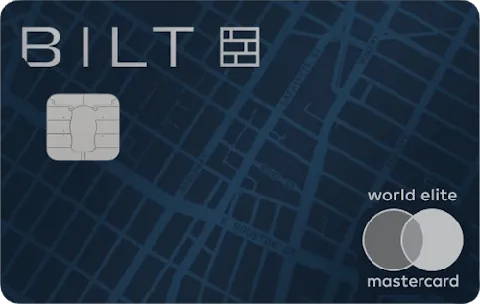
Bilt Blue is the no-annual-fee card in Bilt's Card 2.0 lineup. It earns 1 point per dollar on everyday purchases, and its draw is that eligible housing payments made through Bilt can earn points too. Whether that is worth moving your spending for depends on the card you use now and on how you redeem the points.
In Julia's worked example, a $2,400 housing payment plus $1,200 of everyday purchases earns 3,000 points on Blue. Against keeping those purchases on a 2 percent card, the gain is $3.50 for the cycle at 1 cent per point, or roughly $10.37 at 1.25 cents. A different existing card could narrow that further or reverse it.
The Studio gives Blue a Wallet Score of 61 out of 100. Its fit note reads, "Everyday spending that fits Bilt partners, with optional points transfers." Its limitation reads, "Housing rewards are outside the 30,000-dollar nonhousing test. Bilt Cash has restricted uses and cannot be withdrawn as cash."
What it costs
Blue has no annual fee. The cost to count is the rewards you would give up on the card you already use, so Julia sets Blue against what the same purchases earn elsewhere: in her example, a card paying 2 percent.
Housing payments carry a practical cost too. Under Card 2.0, eligible housing payments through Bilt come from a linked bank account and do not use the card's credit line. Bilt says it automatically debits that account within 24 hours, so the rent money has to be ready. Julia confirms the method works with the property manager or mortgage servicer, and checks delivery timing, before relying on it.
What it earns
Everyday purchases on Blue earn 1 point per dollar. The Studio values a Bilt point at 1.25 cents; Julia's examples use 1 cent and then 1.25 cents, so you can see how much the redemption value moves the answer.
The housing reward depends on the option you choose. Housing-only compares eligible everyday spending with eligible housing payments during the billing cycle:
- Spend at least 25 percent of the housing amount, and housing earns 0.5 points per dollar.
- Spend 50 percent, and housing earns 0.75 points per dollar. At 75 percent it earns 1 point, and at 100 percent, 1.25 points.
- Below the first threshold, qualifying accounts can still earn a minimum of 250 housing points for the cycle.
Everyday card points are separate. Under Housing-only you do not also earn the Flexible option's 4 percent in Bilt Cash.
The credits, used honestly
The Flexible option pays 4 percent in Bilt Cash on eligible everyday purchases, alongside ordinary card points. Despite the name, Bilt Cash is not a deposit into your bank account. It is worth something only through a permitted program use that suits your household, and the Studio counts it only where it replaces specified purchases. Unused allowances add nothing.
One permitted use is unlocking housing points: $3 of Bilt Cash unlocks 100 points, up to 1 point per eligible housing dollar. If another permitted use saves you more than that, Flexible may suit you better. Count each dollar of Bilt Cash once, because once you have used it one way you cannot also spend it the other way.
Year-end matters. Only up to $100 of Flexible Bilt Cash rolls into the next year, and the rest expires, so earning more restricted credit than you can use does not improve a budget. The Studio's rate card counts the Bilt Cash a household can use at $290 to $390 a year across its 3 budgets.
The catch
Timing is the first catch. Purchases need to post in the relevant billing cycle to count toward a spending level, and returns can reduce the amount. A calendar month and your billing cycle are not necessarily the same dates, and Bilt Cash availability and option changes have their own timing rules, so follow the current app progress and the formal terms.
If you are close to a threshold, compare the extra reward before changing anything. Buying something unnecessary can cost more than the higher multiplier adds, while moving a purchase you already planned may be different if the timing and budget work.
The second catch is outdated information. The old Wells Fargo Bilt arrangement had a 5-transaction rule and a rent-points cap. Card 2.0's terms are substantially different, so figures built on those old rules do not apply.
The third is the limit of the Studio's test. The Wallet Score uses ordinary spending outside housing, so the housing reward is not part of the 61. Restricted Bilt Cash is not an extra 4 percent you can simply withdraw into your bank account.
Who it fits
It fits a household that pays rent or a mortgage through Bilt from a linked bank account, keeps that money funded, and has everyday purchases large enough to reach a spending level without buying anything extra. In Julia's example that is $1,200 of purchases against a $2,400 housing payment, which reaches 50 percent. The gain is larger when the card now holding those purchases earns little and when the points will be redeemed at a value the household actually uses.
It fits less well a household whose current card already earns more than 2 percent, one that can only redeem near 1 cent per point, where Julia's gain falls to $3.50, or one that could reach a higher spending level only by buying things it does not need.
The arithmetic
Julia's example uses a $2,400 housing payment and $1,200 of everyday purchases that now earn 2 percent on her current card, with Blue's Housing-only option.
- Everyday purchases on Blue earn 1 point per dollar: 1,200 points.
- The $1,200 is 50 percent of the housing payment, so housing earns 0.75 points per dollar: 1,800 points. Together, 3,000 points.
At 1 cent per point, the 3,000 points are worth $30. Keeping the purchases on the 2 percent card gives $24 in cash. A Bilt housing setup that qualifies without everyday spending would still earn the minimum 250 housing points, worth another $2.50. That existing approach is worth $26.50, so moving the spending adds $3.50 for the cycle.
At 1.25 cents per point, the 3,000 points are worth $37.50. The alternative's 250 points are worth about $3.13, which with the $24 in cash back gives about $27.13. Moving the spending now adds roughly $10.37.
The Flexible option, with the same spending: $1,200 earns 4 percent, or $48 in Bilt Cash. Used to unlock housing points, that is 1,600 housing points, and with the 1,200 ordinary points it comes to 2,800. Housing-only gives 200 more points.
Before you apply
Check Bilt's current Card 2.0 terms: how housing payments are made and debited, the Housing-only spending levels and the Flexible option, the Bilt Cash rules and expiry, and your billing-cycle dates.
The figures here were checked on October 6, 2026. Terms may have moved since Julia recorded the video, and her example rests on assumptions: a $2,400 housing payment, $1,200 of everyday purchases, a 2 percent current card and a point value of 1 cent or 1.25 cents. Replace them with your own. For an ongoing comparison Julia assumes you pay in full, with no interest or extra card-payment fees.
Rewritten from Julia’s review script (1,261 words); every figure traces to the script or this card’s record. Terms checked Oct 6, 2026.