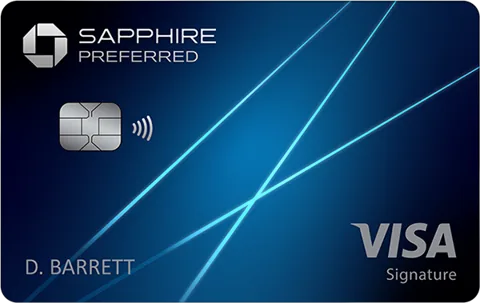
Chase Sapphire Preferred: ahead of a 2% card with a Chase Travel hotel stay
For travelers who book hotels through Chase Travel, Preferred ended $99.90 ahead of a 2% card in Julia's test, or $59.90 if the groceries did not qualify.
The short answer
Chase Sapphire Preferred is a travel rewards card with a $95 annual fee. It earns Chase points on dining, gas and qualifying travel, and it adds a hotel credit that works only through Chase Travel. It suits a household that books a hotel through Chase Travel anyway and spends in its 3-point categories.
In Julia's test it finishes $99.90 ahead of a 2% card for the year, or $59.90 ahead if the groceries do not qualify. Neither result needs a welcome bonus or a room upgrade.
It is a weaker fit if you book hotels directly, buy groceries at ordinary checkouts, Target, Walmart or wholesale clubs, or want a general lounge membership, which this card does not include. The Studio's verdict on fit is "Travel protections and transfer options with a modest annual fee." Its limitation: "The score uses a fixed redemption route; potentially better transfer redemptions are not assumed."
What it costs
The annual fee is $95, and the Studio's rate card lists no membership cost beyond it. Julia compares the card with a 2% card, using purchases she pays in full and leaving out the welcome offer and any room upgrade.
The hotel credit is part of that comparison, but it is not free money. It helps only with a stay you already want, booked through Chase Travel.
What it earns
- 5 points per dollar on Chase Travel purchases.
- 3 points per dollar on dining, on gas and EV charging, and on eligible online groceries.
- 3 points on selected streaming and qualifying vacation-home brands.
- 2 points per dollar on other travel.
- 1 point per dollar outside the bonus categories.
Points can be used for cash or for eligible travel options. Julia uses 1 cent per point as the cash value. Selected Chase Travel bookings can offer up to 1.5 cents per point with Preferred, but selected is the word to notice: that rate does not apply to every flight or room. Earlier accounts and older points can have transition rules, so the actual redemption screen is the one to check.
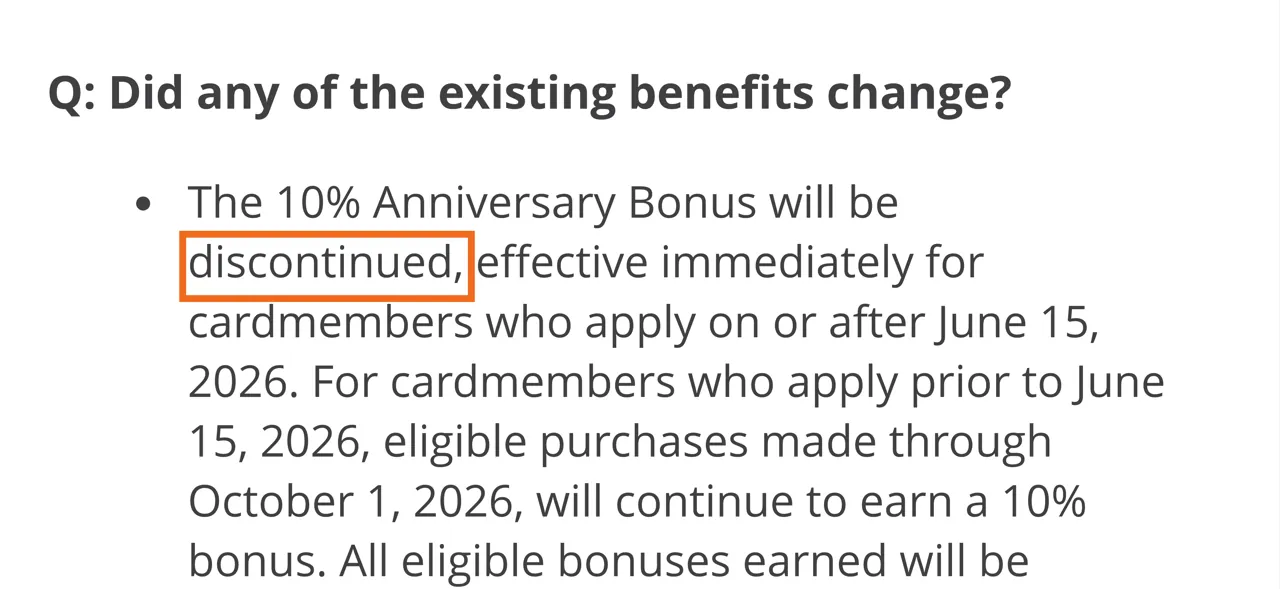
The June 2026 changes mean older reviews may show different terms. The old 10% anniversary bonus is being retired, and Julia leaves it out of the ongoing estimate.
The credits, used honestly
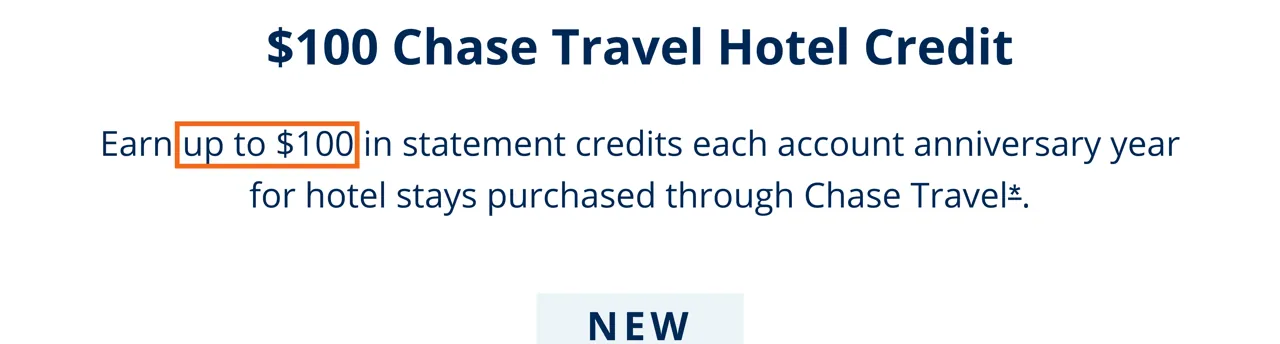
The credit that matters here is the $100 hotel credit. Julia counts it only against a stay she already intends to book, and she compares both complete bookings first: the same room and cancellation policy, taxes and fees, and any hotel benefits she would lose by booking through the portal.
- The credit follows your account anniversary year.
- You need to book through Chase Travel; paying the hotel directly does not trigger it.
- A canceled or changed booking can reverse the credit, and Chase can reverse it if the account closes within 90 days of receiving one.
The credited $100 earns no points, and the portal room can start at a higher price, so the saving is less than the full $100 advertised.
Smaller benefits count only if they replace something you already need. An eligible Global Entry, TSA PreCheck or NEXUS application can receive up to $120 back every 4 years, so the full amount is not an annual saving. DashPass and the monthly qualifying nonrestaurant DoorDash promotion have activation and purchase requirements, and temporary subscriptions and promotional earning have end dates.
The catch
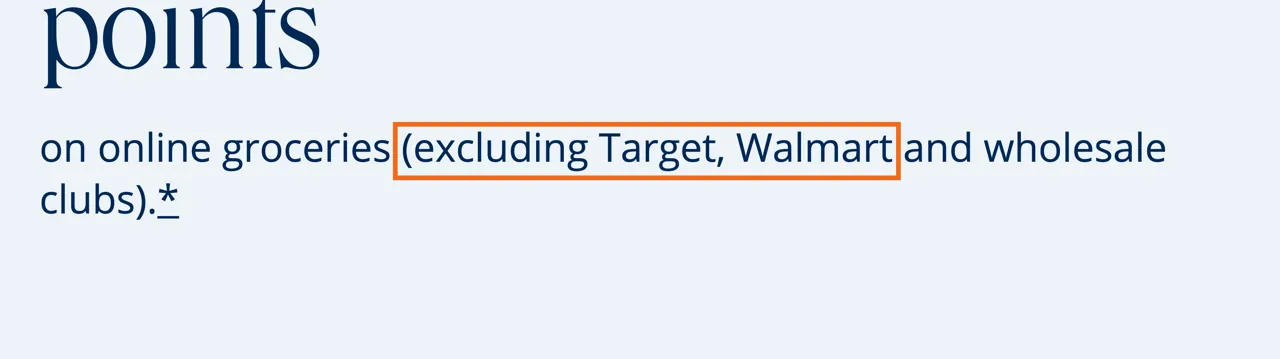
Online groceries are the detail most likely to change the answer. Ordering groceries online and walking through a checkout do not necessarily earn the same rate. Preferred's online grocery category excludes Target, Walmart and wholesale clubs, and using an app does not automatically make a purchase eligible. Check what actually posts, because a payment method that works at one store may not work the same way somewhere else.
Transfers carry their own trap. Preferred sends 4 Chase points to World of Hyatt and receives 3 Hyatt points, a ratio earlier cardholders moved to on October 1, 2026. Receiving 25% fewer points does not mean needing 25% more for the same award: with this ratio you need 1/3 more Chase points than with a 1-to-1 transfer. Other partners have their own ratios and rules, so availability, taxes, cancellation terms and transfer timing need checking before anything moves.
Protection is not an automatic payout. Read the current benefit guide for how you must pay, covered causes, exclusions and claim deadlines. Rental damage coverage is not liability insurance, and a flight delay does not automatically mean a payout. Prior cards and bonuses can affect welcome-offer eligibility, and an advertisement is not an approval.
Who it fits
Preferred fits a household like the one in Julia's example: a hotel stay it already wants to book through Chase Travel, $5,000 on dining, $3,000 on gas and EV charging, $4,000 on eligible online groceries and $2,000 on other travel. That $14,000 earns 40,000 points, and the rest of the household's spending can stay on the 2% card.
It fits less well when grocery shopping happens at ordinary supermarket checkouts, Target, Walmart or wholesale clubs, or when hotels are booked directly. Julia would keep that spending on the 2% card and accept the smaller saving rather than change stores to preserve the comparison.
The arithmetic
For the hotel, Julia finds the same room for $280 direct and $310 through Chase Travel. The $100 credit brings the portal charge to $210, and only that $210 earns points, at 5 points per dollar. At 1 cent each, those points are worth $10.50, so the portal booking has a net cost of $199.50. Booking direct on a 2% card costs $274.40 after cash back, so the saving is $74.90.
For the everyday budget, $5,000 on dining, $3,000 on gas and EV charging and $4,000 on eligible online groceries earn 3 points per dollar, and $2,000 of other travel earns 2 points. Those $14,000 of purchases earn 40,000 points, worth $400 at 1 cent each. A 2% card earns $280 on the same purchases, so Preferred adds $120 before its fee. The $95 fee leaves $25, and the $74.90 hotel saving makes $99.90 ahead.
If the $4,000 of groceries goes through ordinary supermarket checkouts, it moves to the 2% card, and Preferred loses its extra 1% on that spending, which is $40. The advantage drops from $99.90 to $59.90.
A Hyatt example shows the transfer math. An available room for 24,000 Hyatt points replaces a $480 room, and the 4-to-3 ratio means 32,000 Chase points for those 24,000. Saving $480 with 32,000 Chase points is 1.5 cents per Chase point. The Hyatt points look worth 2 cents each, but because Chase points are spent to get them, the Chase-point cost is the one that counts.
Before you apply
On the issuer's page today, check the $95 annual fee, the earning rates after the June 2026 changes, the hotel credit's terms, which grocery purchases qualify for the online category, and the transfer ratio for any partner you would use. Check your welcome offer and eligibility separately, using purchases you already plan to pay in full.
The figures in this article were verified on October 6, 2026.
Rewritten from Julia’s review script (1,223 words); every figure traces to the script or this card’s record. Terms checked Oct 6, 2026.