
Amex Gold: ahead of a 3% food card only when points are worth more than 1 cent
For households whose food spending qualifies, Gold beats a 3% no-fee card only with credits you already use and travel awards worth over 1 cent a point.
The short answer
The American Express Gold Card suits a household whose food spending lands at restaurants and eligible U.S. supermarkets, and that would use its credits without changing what it buys. It earns 4 Membership Rewards points per dollar in those two categories and charges a $325 annual fee.
Julia's test sets Gold against a no-annual-fee card that earns 3% on the same purchases, such as Capital One Savor. In her three tests, Gold finishes behind that card when the points are worth 0.6 cent or 1 cent each, and ahead of it at 1.5 cents.
A household that shops at warehouse clubs or superstores, wants simple cash back, or would use the credits only because they exist gets less from the card. The Studio's verdict on fit is "Food spending and dining or ride credits that fit existing habits." Its limitation: "A poor match for simple cash back. The score depends on using its restricted credits."
What it costs
Gold has a $325 annual fee, and the Studio's rate card lists no membership cost beyond it. Julia pays every purchase in full and leaves the welcome offer out of the ongoing decision, so the fee is the one cost her sums have to cover.
What the card is measured against matters as much as the fee. Julia compares Gold with a no-annual-fee card earning 3% on the same eligible food purchases, such as Capital One Savor, which returns $324 in cash on her example spending. A 2% card would earn less, but a suitable 3% food card is the comparison Gold has to win.
What it earns
- 4 Membership Rewards points per dollar at eligible restaurants worldwide, on up to $50,000 of purchases per calendar year.
- 4 points per dollar at U.S. supermarkets, with a separate limit of $25,000 a year.
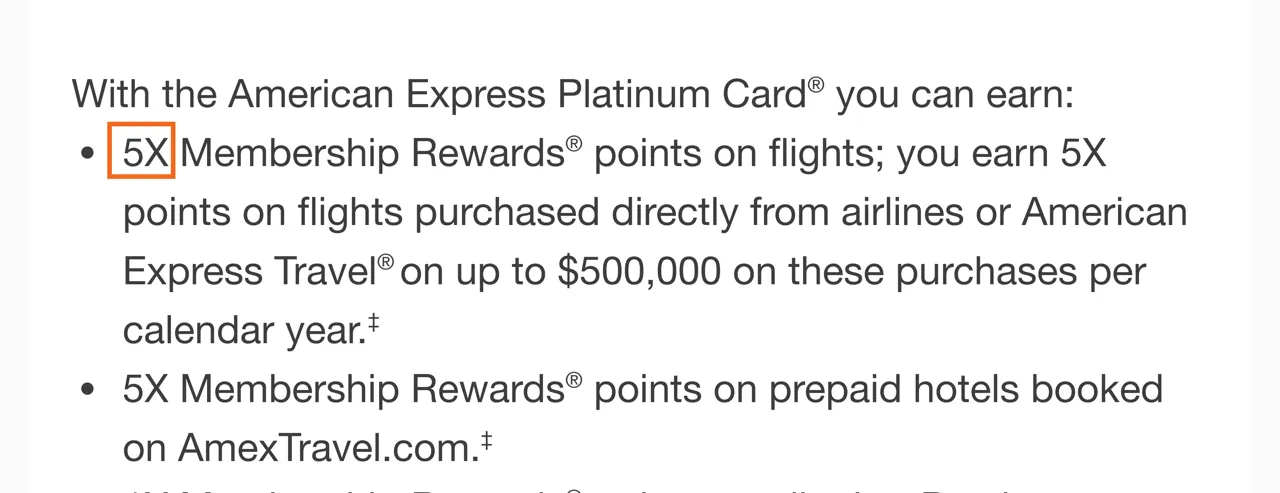
- 3 points on eligible flights booked directly or through Amex Travel.
- 5 points on prepaid hotels booked through Amex Travel, and 2 points on eligible prepaid car rentals and cruises there.
- 1 point per dollar on everything else, including spending above either limit.
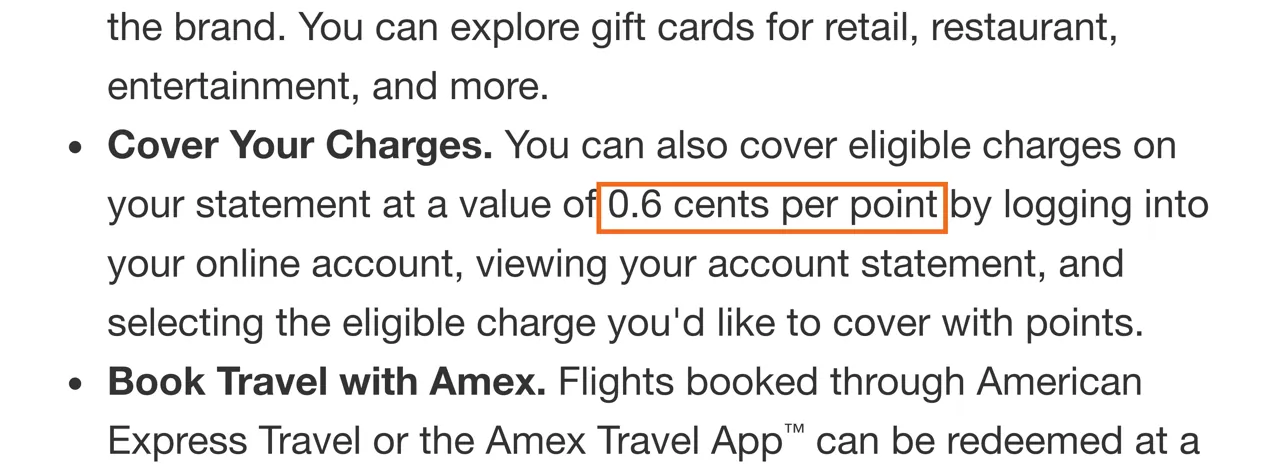
What a point is worth depends on how you spend it. Statement credits against eligible card charges generally give 0.6 cent per point, so 4 points per dollar returns 2.4% before the fee. Eligible flights through Amex Travel can give 1 cent per point if the airfare is competitive. Julia also tests an available award at 1.5 cents per point, after the transfer ratio, taxes and any transfer charge.
The credits, used honestly
Dining, Uber Cash, Resy and Dunkin' add up to a headline $424 a year, which looks like enough to cover the fee. It is not one pot of money: each benefit has its own rules and deadline.
- Dining: up to $10 a month at participating partners, after enrollment.
- Uber Cash: $10 a month for eligible U.S. rides and orders, once you add the card to your Uber account and meet the required Amex payment setup.
- Dunkin': up to $7 a month, after enrollment.
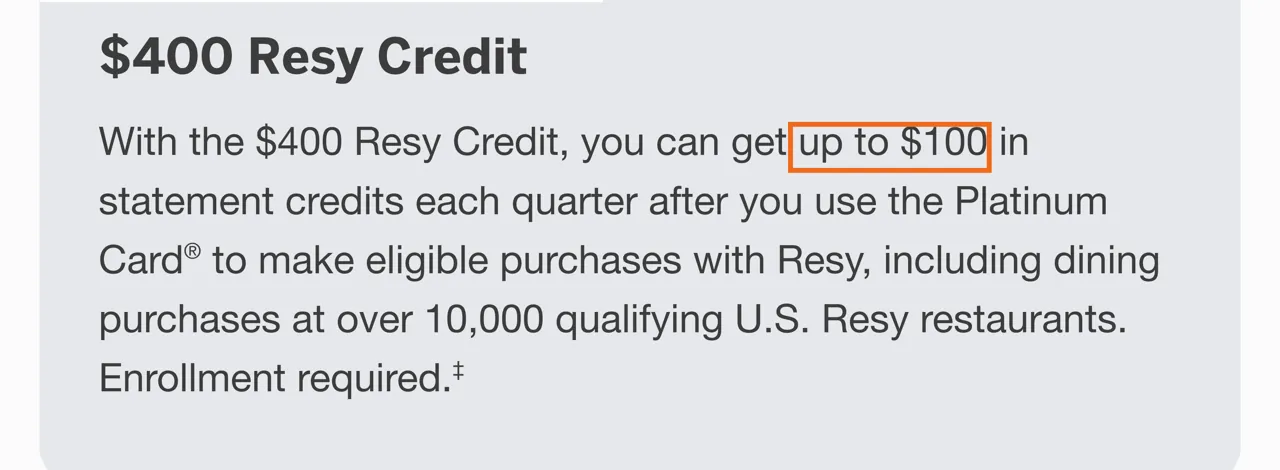
- Resy: up to $50 in each half of the calendar year, with enrollment and a qualifying purchase.
These are statement credits on qualifying purchases. A month you miss is gone, so skipping November does not double December's allowance. Additional cards share the account's allowance instead of adding another set.
Julia counts a credit only when the household would use it in its normal routine. In her example that is 8 dining credits of $10, or $80, plus both $50 Resy allowances, or $100, for $180 of useful credits. Uber Cash and Dunkin' count as $0 because the family would not use them otherwise.
She does not take those meals out of the spending again, since that would count the saving twice. A restaurant credit helps with a dinner you would already buy; a new dinner is still a new expense.
The catch
The store matters more than the spending limit. Buying groceries at a warehouse club does not turn it into an eligible supermarket, and the same goes for superstores. What counts is how the business is classified, and a restaurant that charges you directly can work differently from a payment processed through another business.
Points carry their own catch. Once you move them out of your Amex account to book an award, you generally cannot send them back to the bank if a seat disappears or plans change. Julia's rule is to find the award before moving any points.
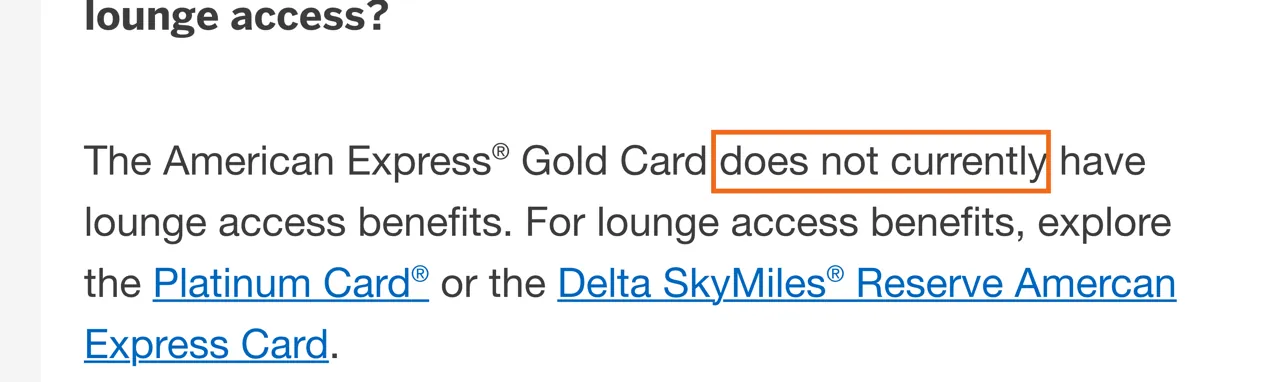
The travel extras are harder to price. Hertz Five Star status needs enrollment, and the Hotel Collection benefits need a qualifying stay, so Julia checks prices and conditions before giving them a dollar value. Gold does not include a general airport-lounge membership.
A welcome offer is a separate calculation that her ongoing comparison leaves out. If you look at one, check your offer and eligibility, and divide the required purchases by the months available. Extra purchases or interest change the result, and the bonus does not return at every renewal.
Who it fits
Gold fits a household like the one in Julia's example: $6,000 at qualifying U.S. supermarkets, $4,800 at eligible restaurants, and $180 of credits it would use anyway. It also needs a use for the points, such as an eligible flight through Amex Travel or an award worth 1.5 cents a point. Julia says she would choose it when the credits fit that routine and she has a travel use for the points, but she would not change the household's food spending just to make the card look worthwhile.
It fits less well when grocery spending goes to warehouse clubs or superstores, when the points would become statement credits, or when you want cash without managing a trip around rewards. In those cases the 3% card suits the spending better, earning $324 with no fee to cover.
The arithmetic
Julia's example household spends $6,000 at qualifying U.S. supermarkets and $4,800 at eligible restaurants, which is $10,800 on food. At 4 points per dollar, Gold earns 43,200 points. A no-fee 3% card such as Capital One Savor earns $324 in cash on the same $10,800.
In every case Gold gets the same meals, $180 of credits and the $325 fee. Only the redemption changes:
- Statement credit at 0.6 cent per point: 43,200 points cover $259.20 of eligible charges. Add $180 of credits and subtract the $325 fee, and Gold leaves $114.20. That is $209.80 behind Savor.
- Eligible flights through Amex Travel at 1 cent per point: the points are worth $432. After the same credits and fee, Gold leaves $287, which is $37 behind Savor.
- An available award at 1.5 cents per point: the points are worth $648. After the same credits and fee, Gold leaves $503, which is $179 ahead of Savor.
If the household misses both Resy allowances, every Gold result drops by $100. The spending is the same either way; how the points are redeemed decides which card comes out ahead.
Before you apply
On the issuer's page today, check the $325 annual fee, the 4-point categories with their $50,000 and $25,000 limits, the amount and enrollment steps for each credit, and the terms and your eligibility for any welcome offer. Then price the redemption you would actually use: 0.6 cent per point for statement credits, or the cost of a booking you would really make.
The figures in this article were verified on October 5, 2026. The Studio's rate card lists the Resy credit at $180 a year and the Dunkin' credit at $60 a year, amounts taken from its test budgets, and flags both for review. The video has up to $50 in each half of the year and up to $7 a month, so confirm both amounts on the issuer's page.
Rewritten from Julia’s review script (1,326 words); every figure traces to the script or this card’s record. Terms checked Oct 5, 2026.