Delta Reserve Business: paying for lounge visits beats moving $75,000 by $500
A $650 Delta card: Julia's example pays $250 for five extra lounge visits instead of moving $75,000 from a 2% card, ending $500 ahead.
The short answer
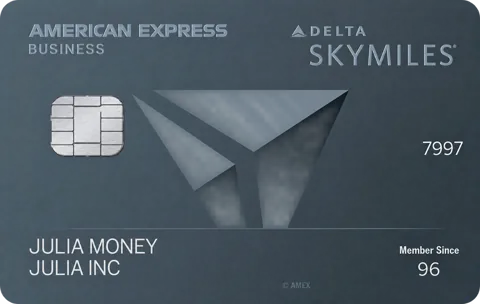
The Delta SkyMiles Reserve Business American Express Card is a premium Delta card with a $650 annual fee. It offers lounge visits, a renewal companion certificate, credits and ways to earn toward status. Julia would consider it around trips her business already needed, then decide which purchases belong on it.
The card includes 15 Delta Sky Club visits each Medallion year. In her example, 20 eligible visits leave 5 to pay for at $50 each, or $250. Moving $75,000 of purchases from a 2% card to unlock unlimited access would give up $750 in rewards, so she would pay for the visits and finish $500 ahead.
The Studio gives it a Business Wallet Score of 45 out of 100. Its fit note reads, "Businesses with recurring eligible Delta trips." It suits a business with busy Delta travel that would use the lounges and the companion certificate. It fits less well one that mostly flies economy and passes through airports quickly, or one that would move spending only to unlock lounge access.
What it costs
The annual fee is $650, which is $300 more each year than Delta Platinum Business. Both cards offer a 2,500 MQD head start, so that shared benefit does not explain the extra fee. Julia wants Reserve's lounge access, broader companion-certificate cabin choices or faster MQD earning to make up the difference on trips she would already take.
Employee cards need their own check. An employee card for expenses does not automatically include a paid Reserve cardholder's lounge privileges, so read each option and its fee before promising access to a team.
What it earns
- 3 miles per dollar on eligible direct Delta purchases.
- 1.5 miles per dollar on qualifying transit, U.S. shipping and U.S. office-supply-store purchases.
- 1 mile per dollar on other ordinary purchases.
After $150,000 of eligible calendar-year purchases, later eligible purchases can earn 1.5 miles for the rest of that year. That does not raise earlier ordinary spending retroactively, and higher categories do not stack with it. Julia compares each part of the year with the rewards she would otherwise earn. The Studio's rate card values a mile at 1 cent, the same value she uses.
The card also gives a 2,500 MQD annual head start and 1 MQD per $10 of eligible purchases. These are status-qualification credits, not redeemable miles or dollars, and their value depends on reaching a tier that helps your actual travel.
The credits, used honestly
Julia starts with lounge access. The 15 included visits run for each Medallion year, from February 1 through January 31, and one visit can include several clubs within a 24-hour period, so Julia counts travel days rather than every lounge doorway. Extra visits can cost $50 each, and unlimited access unlocks after $75,000 of eligible purchases in a calendar year.
The basic cardholder also gets 4 one-time Sky Club guest passes each Medallion year, used when you accompany the guest and enter with Reserve. If a colleague joined her on 6 eligible visits, the passes would cover 4 and the other 2 would cost $100 at the $50 guest rate. Unlimited personal access does not remove those guest charges.
Centurion access has its own conditions: the eligible same-day Delta flight must be booked on a U.S. American Express card, you need the Reserve card and boarding pass, and guest fees, entry windows and same-flight rules differ. Sky Club guest passes do not work there.
The renewal companion certificate covers an eligible trip for 2 on qualifying Delta Main, Comfort, Premium Select or First travel on the specified routes, but not Delta One. Julia compares the qualifying primary fare with the tickets she would otherwise buy and includes the companion's taxes and fees. Both passengers travel together, and booking and travel must finish before expiry.
The certificate arrives after renewal and uses restricted fare classes, so she counts what the usable booking saved, not the price of a premium cabin she would never choose.
The first standard bag waiver can cover the cardholder and up to 8 companions, and the domestic second-bag waiver is for eligible basic cardholders; bags already covered save nothing more.
The hotel benefit is up to $250 a year on eligible prepaid Delta Stays bookings. Enrolled Resy credits offer up to $20 monthly, and selected U.S. rideshare purchases can receive up to $10 monthly after enrollment. Unused months and benefits another card already covers add nothing new.
The Studio's rate card carries the hotel credit at up to $250, the Resy credit at up to $180 and bag savings at up to $240, and flags them for a check on the issuer's page.
The catch
Unlimited access needs the purchases, enough cash to repay them and time for the access to take effect. Returns can reduce eligible spending, so Julia would confirm access in her account before relying on it for a flight.
The travel rules do not disappear at the threshold. Sky Club access requires eligible same-day Delta-marketed or Delta-operated travel. Delta Main Basic and similar basic fares do not qualify, and capacity can limit entry. Departing passengers normally enter within 3 hours of departure, with different treatment for connections, so check the terminal and opening hours alongside the itinerary.
In the Studio's test, the card passes both protection tests, but the $650 fee is a big hurdle. The shared travel plan has one traveler and no paid lounge membership to replace, so those benefits do not reduce its costs. Julia's own busy travel year could justify paying for that comfort. The Studio's limitation note reads, "Most spend earns modest miles; personal fit depends on Delta route, certificate and lounge use."
Who it fits
It fits a business with busy Delta travel, like Julia's schedule of 20 eligible visits, where the card's overall benefits justify keeping it. It can fit better when the companion certificate is used on trips for two, or when planned eligible spending is already close to the $75,000 threshold.
It fits less well a business that mostly flies economy and moves quickly through airports, or one that would move large spending only to unlock lounges. Julia first chooses whether the overall benefits justify renewal, then compares the extra visits with the rewards lost on purchases still needed. Being $5,000 away is very different from moving $75,000 solely for the lounges.
The arithmetic
Julia assumes 20 eligible visits and a card she has already decided to keep.
- Extra visits: 20 less the 15 included leaves 5, at $50 each is $250.
- Moving $75,000: at 1 mile per dollar and 1 cent, 75,000 miles are worth $750, against $1,500 from an uncapped 2% card. She would give up $750 to avoid $250, so paying for the visits leaves her $500 better off, before valuing extra status qualification.
- Only $5,000 away: with $70,000 already on Reserve, the last $5,000 earns $50 there against $100 on the 2% card. She gives up $50 to avoid the same $250, improving the result by $200.
- Guests: 6 visits less 4 passes leaves 2, at $50 each is $100.
- Fee: $650 either way, because she has already decided to keep the card, so it does not change these comparisons.
Before you apply
On Amex's page, check the annual fee, the included visits and guest passes, the $75,000 threshold and how soon access starts, the Centurion conditions, the certificate's cabins and routes, the credits and their enrollment, and the $150,000 earning threshold.
The Studio checked these terms on October 6, 2026, so they may have moved since the video. The 20 visits, the $50 visit price and the 1-cent mile are Julia's assumptions to replace with your own.
Rewritten from Julia’s review script (1,313 words); every figure traces to the script or this card’s record. Terms checked Oct 6, 2026.